

We solve worldwide industrial every problem of global landscape the industry..
Roofing & Cladding
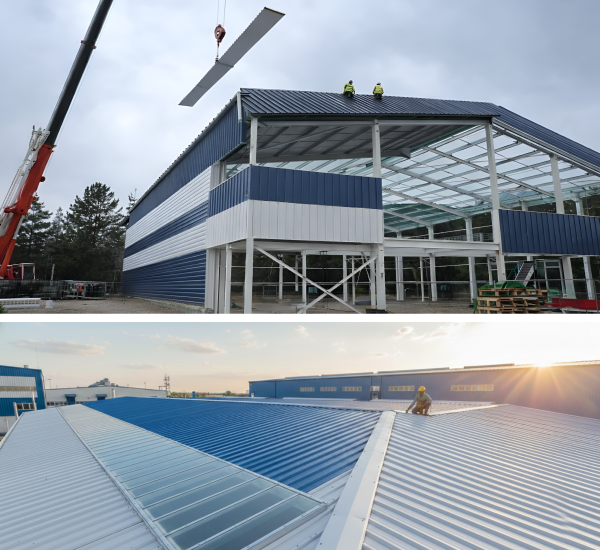
Industrial Roof Cladding – Complete Protection for Modern Buildings
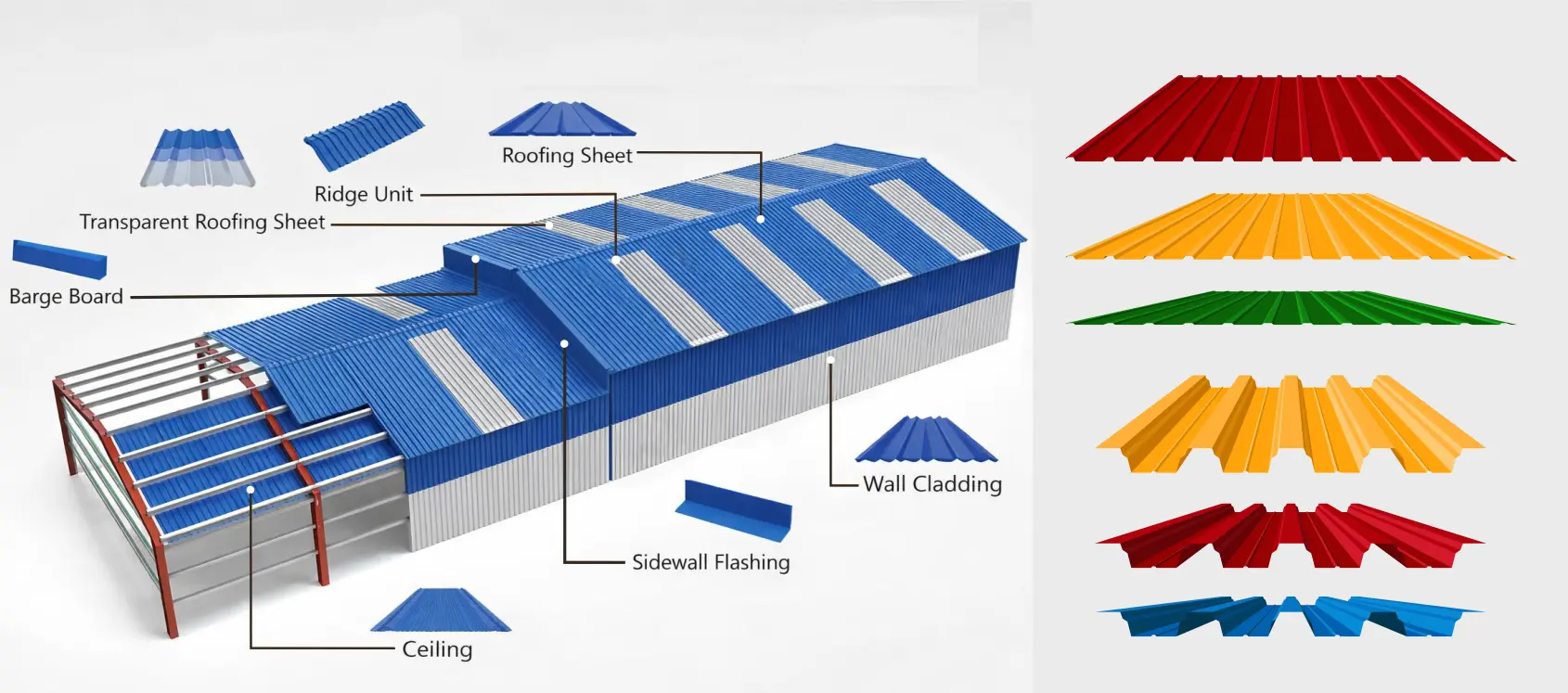
Industrial roof cladding is a high-performance protective covering system installed over the roofs and walls of industrial and commercial buildings. It is specifically designed to safeguard structures from harsh weather, extreme heat, moisture, corrosion, and long-term deterioration, while also improving energy efficiency and visual appeal.
At Future PEB, Hyderabad, we specialize in industrial roofing and cladding solutions for PEB sheds, warehouses, factories, logistics parks, and commercial buildings across Telangana and Andhra Pradesh. Our systems are engineered to meet local climatic conditions and industrial performance requirements.
Our roofing and cladding solutions provide long-lasting durability, faster installation, reduced maintenance costs, and superior insulation, making them ideal for industrial buildings requiring strength, safety, and energy efficiency.
Fabrication : Future PEB Fabrication Excellence
Roofing & Cladding
Roofing & Cladding
INSULATION
INSULATION
Industrial roof cladding insulation plays a crucial role in maintaining comfortable internal temperatures within PEB sheds and industrial buildings in Hyderabad. High-quality insulated roofing systems help reduce heat penetration during peak summer conditions while improving energy efficiency throughout the year. Roof cladding insulation also offers effective soundproofing, making it ideal for factories, warehouses, and manufacturing units where machinery noise is high. Depending on the selected cladding material, insulation can additionally provide enhanced fire resistance and improved safety performance for PEB structures across Telangana.
WEATHER PROTECTION
WEATHER PROTECTION
Roofing and cladding systems provide superior weather protection for PEB buildings in Hyderabad, safeguarding structures from intense sunlight, heavy monsoon rains, strong winds, and dust exposure. Industrial roof cladding acts as a waterproof barrier that prevents moisture ingress, corrosion, and cut-edge deterioration. By installing durable steel roofing and cladding, building owners can significantly reduce long-term maintenance costs, prevent leakage issues, and extend the overall lifespan of industrial roofs and walls in Telangana’s demanding climatic conditions.
WHY DO YOU NEED IT?
WHY DO YOU NEED IT?
Over time, all industrial roofs are exposed to environmental stress and wear. Industrial roofing and cladding systems are designed to minimize frequent repairs and costly replacements by strengthening the overall structure. For PEB sheds, warehouses, and commercial buildings in Hyderabad, roof cladding ensures long-term protection against severe weather damage, heat buildup, and corrosion. Whether industrial or commercial, high-quality PEB roofing and cladding solutions provide durability, safety, and reliable performance for modern infrastructure projects across Telangana and Andhra Pradesh.
“At Future PEB, we believe in combining innovation, precision engineering, and quality steel to deliver structures that stand the test of time. This blog explores the fundamentals of pre-engineered buildings, covering their design principles, construction process, key components, and the long-term benefits that make PEBs the preferred choice for modern infrastructure.”

Quality Control Systems
Strict Quality Control for Reliable PEB Roofing & Cladding Solutions
At Future PEB, HyderabadThe construction industry, particularly the Pre-Engineered Building (PEB) sector, functions under stringent safety standards, engineering codes, and regulatory requirements. Quality control plays a vital role in ensuring that every PEB structure is safe, durable, and compliant with industry norms. Implementing robust quality control systems is essential for delivering reliable and long-lasting PEB solutions.
Our quality control process includes inspection of steel grades, coating thickness, profile accuracy, insulation performance, and fastening systems used in industrial roofing and cladding. These checks help ensure superior resistance to heat, weather, corrosion, and long-term wear, especially under Hyderabad’s climatic conditions.
We follow industry-approved practices and quality benchmarks for PEB sheds, warehouses, factories, and logistics parks across Telangana and Andhra Pradesh. Every roofing and cladding system is tested for dimensional accuracy, water tightness, and structural integrity before project handover.
Awesome Services
Significance of Structural
Integrity and Safety in PEBs
Significance of Structural
Integrity and Safety in PEBs

We are designed to safely accommodate people who depend on the structure for daily operations. From warehouses and factories to commercial facilities, occupant safety is a top priority. Strict quality control ensures structural stability, load resistance, and compliance with safety standards, creating a secure and reliable working environment.

Pre-engineered buildings are often constructed in regions exposed to earthquakes, high winds, heavy rainfall, or snow loads. Effective quality control minimizes structural risks by ensuring precise fabrication, material strength, and design accuracy, improving the building’s ability to withstand extreme environmental conditions.

Pre-engineered buildings are built for long-term performance. Comprehensive quality control guarantees the use of high-grade materials and precision-engineered components, resulting in superior durability, reduced maintenance costs, and an extended building lifespan for decades ahead with enhanced strength and resilience.

Consistent quality control strengthens a manufacturer’s reputation and builds long-term client trust. By delivering reliable, high-quality pre-engineered buildings on time, manufacturers enhance customer satisfaction, encourage repeat business, and generate positive industry recognition across competitive global construction markets.
Key Aspects of Quality Control in
Pre-Engineered Building (PEB) Manufacturing
Key Aspects of Quality Control in
Pre-Engineered Building (PEB) Manufacturing
Pre-Engineered Building (PEB) Manufacturing
Quality control is a critical factor in delivering safe, durable, and high-performance pre-engineered buildings. A future-ready PEB manufacturing company adopts advanced inspection, testing, and process control systems to ensure every structural component meets engineering specifications, regulatory requirements, and long-term performance expectations.
A. Material Inspection and Performance Testing
A. Material Inspection and Performance Testing
Material inspection forms the foundation of quality assurance in PEB manufacturing. Structural steel, roofing sheets, insulation materials, and fastening systems are sourced from certified suppliers and verified through material traceability and mill test certificates. Rigorous testing of mechanical strength, chemical composition, dimensional accuracy, and surface finish ensures superior durability, load-bearing capacity, and resistance to environmental stresses.
B. Manufacturing Process Control
B. Manufacturing Process Control
Manufacturing process control ensures precision, consistency, and structural accuracy throughout PEB fabrication. Welding activities are performed by certified welders following approved welding procedures, while fabrication processes such as cutting, drilling, forming, and assembly are closely monitored. Strict adherence to design drawings, load calculations, and engineering specifications guarantees dimensional accuracy and reliable structural performance.
C. Non-Destructive Testing (NDT) for Structural Integrity
C. Non-Destructive Testing (NDT) for Structural Integrity
Non-Destructive Testing (NDT) is essential for identifying hidden defects without damaging PEB components. Techniques such as Ultrasonic Testing (UT), Magnetic Particle Inspection (MPI), Radiographic Testing (RT), and detailed visual inspections are used to detect cracks, inclusions, weld discontinuities, and material inconsistencies. These tests enhance structural safety, ensure compliance with quality standards, and improve long-term building reliability.
D. Quality Control Systems and Inspection Procedures
D. Quality Control Systems and Inspection Procedures
A structured quality control system ensures consistency and traceability throughout the PEB manufacturing process. Incoming materials are inspected before production, in-process inspections are conducted at every fabrication stage, and final inspections verify dimensional accuracy, weld quality, surface protection, and documentation. These procedures minimize defects, reduce rework, and ensure the delivery of high-quality, future-ready pre-engineered buildings.
PEB Manufacturing Capacity & Capability
At Future PEB, our advanced manufacturing facility forms the foundation of our ability to deliver high-quality, scalable Pre-Engineered Building (PEB) solutions with speed, precision, and consistency.
The facility currently operates from a 150,000 sq. ft. state-of-the-art manufacturing area, with a planned expansion capability of up to 300,000 sq. ft., ensuring readiness for future growth and increased demand. Designed with optimized production flow and modern fabrication practices, the plant is capable of executing multiple large-scale projects simultaneously without compromising quality or timelines.
With an operational fabrication capacity of 40,000 metric tonnes per annum and an installed capacity of 60,000 metric tonnes, the unit manufactures a comprehensive range of PEB components, including primary structural members, secondary framing systems, purlins, roofing solutions, and accessories.
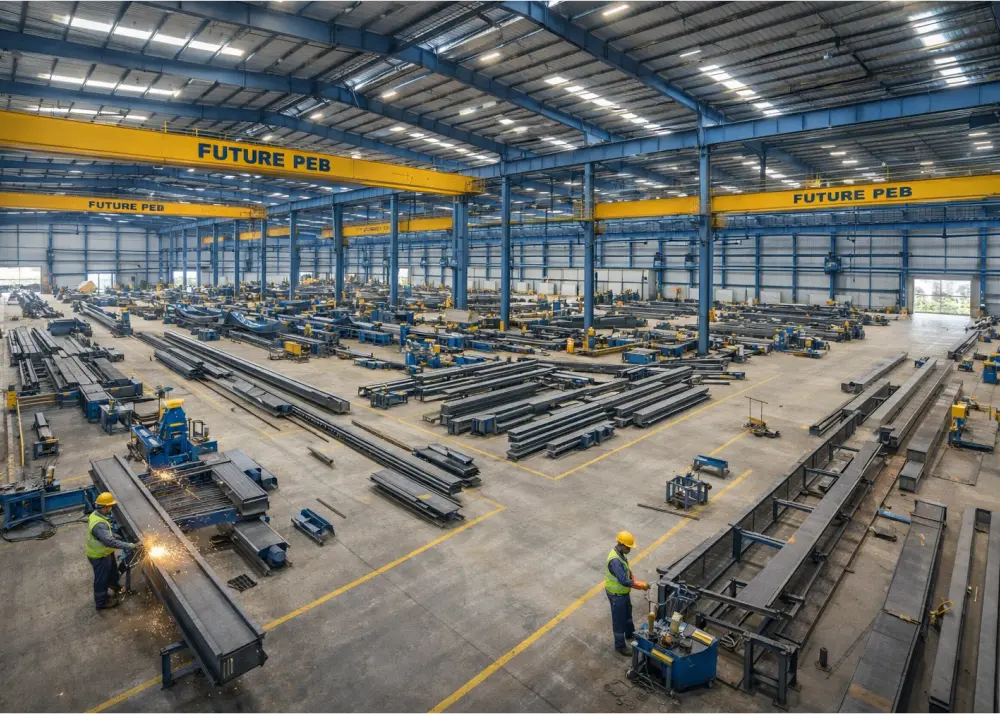
High-Capacity Production for Scalable PEB Project Delivery
Strong manufacturing capacity is a critical factor in ensuring timely delivery, consistent quality, and cost efficiency in pre-engineered building projects.
- Enables smooth execution of large-scale and multiple PEB projects simultaneously without compromising quality, timelines, or operational control.
- Ensures faster fabrication cycles by streamlining production workflows and maintaining strict adherence to challenging project schedules.
- Maintains consistent quality levels through standardized manufacturing processes, controlled environments, and high-volume production capabilities.
- Improves material planning accuracy, optimizes resource utilization, and enhances overall production efficiency across all project phases.
- Reduces reliance on external outsourcing, minimizing coordination issues, delays, and potential risks affecting overall project delivery.
- Strengthens operational reliability, scalability, and long-term performance of PEB projects through integrated and well-managed production systems.
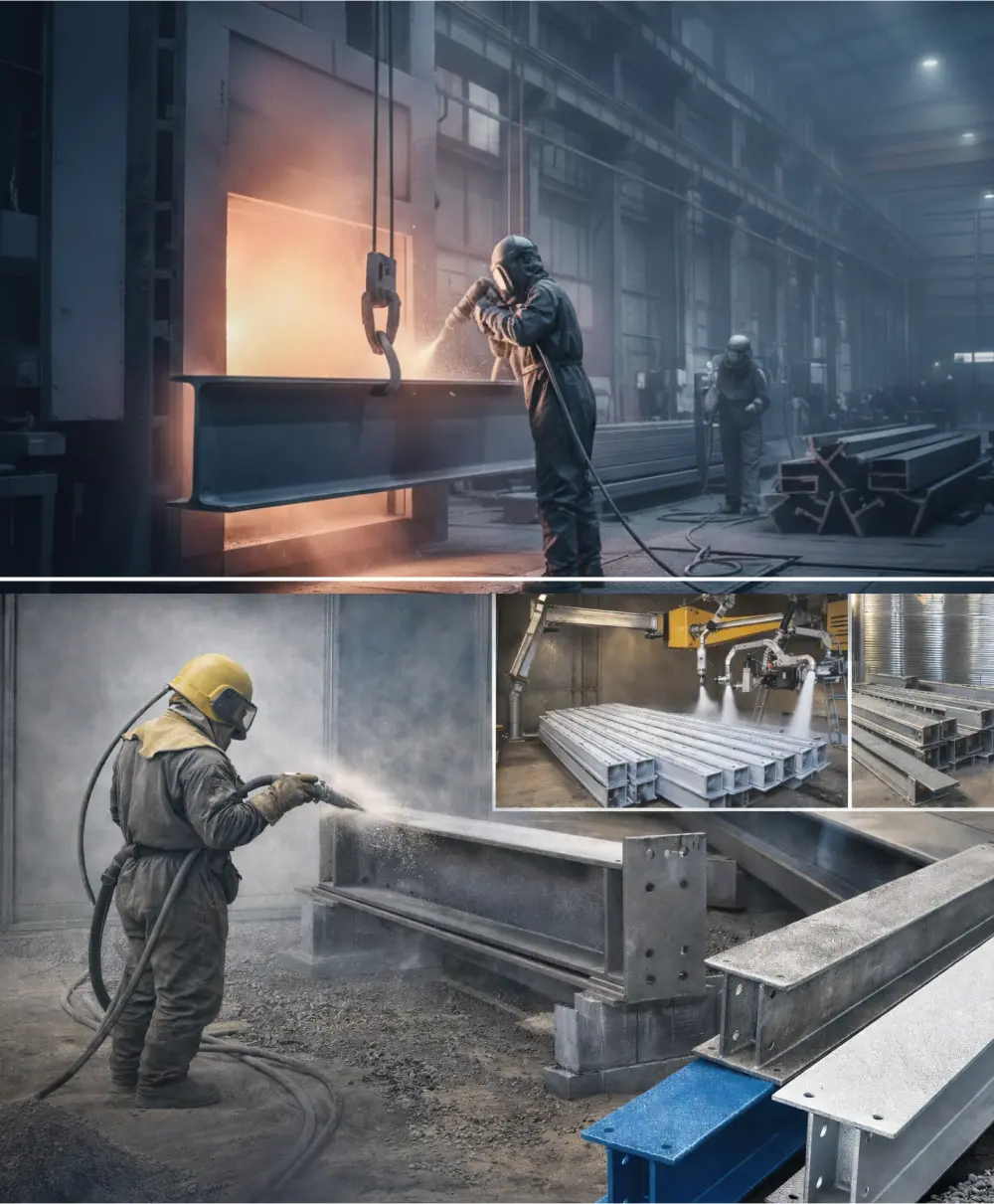
Surface Treatment Excellence in
Future PEB
At Future PEB, surface treatment is a critical part of our fabrication process, ensuring corrosion resistance, durability, and long-term structural performance. Our advanced surface preparation and coating systems protect steel components against harsh environmental conditions while maintaining superior finish quality, in accordance with recognized industry standards.
We follow industry-approved surface preparation standards such as SA 2 / SA 2½ abrasive blasting and SSPC / NACE surface preparation specifications, along with epoxy and polyurethane coating systems and hot-dip galvanization. These processes ensure extended service life, excellent adhesion, and consistent quality for PEB structures across industrial and coastal environments.
12+
Years Experience
700+
Completed Projects
Surface Preparation Methods
Used in PEB Fabrication
Surface Preparation Methods
Used in PEB Fabrication
Used in PEB Fabrication
Advanced surface treatment processes ensure corrosion protection, durability, and long-term
performance of
structural steel components throughout the
project lifecycle—from fabrication and coating to
transportation
and on-site erection.
- Abrasive blasting to SA 2 / SA 2½ standards for effective removal of rust, mill scale, and surface contaminants
- Mechanical surface cleaning using power tools for localized preparation and touch-up areas
- Degreasing and solvent cleaning to eliminate oil, grease, and chemical residues before coating application
- Surface profiling to achieve the required anchor pattern for strong coating adhesion
- Inspection of surface cleanliness and profile depth as per SSPC / NACE specifications
- Application of primer coatings immediately after surface preparation to prevent flash rusting
- Controlled environmental conditions during preparation to ensure coating performance and durability
- Thickness measurement and quality checks for each surface preparation stage
- Preparation of steel members for epoxy, polyurethane, or galvanization systems
- Improved coating life, corrosion resistance, and long-term structural protection through proper surface preparation
By implementing controlled surface preparation and coating systems, project stakeholders achieve
consistent
quality, enhanced protection, and extended service life,
ensuring reliable performance of
PEB structures
across diverse environmental conditions.
 Whatsapp
 Phone Call