

Engineering Excellence in Pre Engineered Building Design

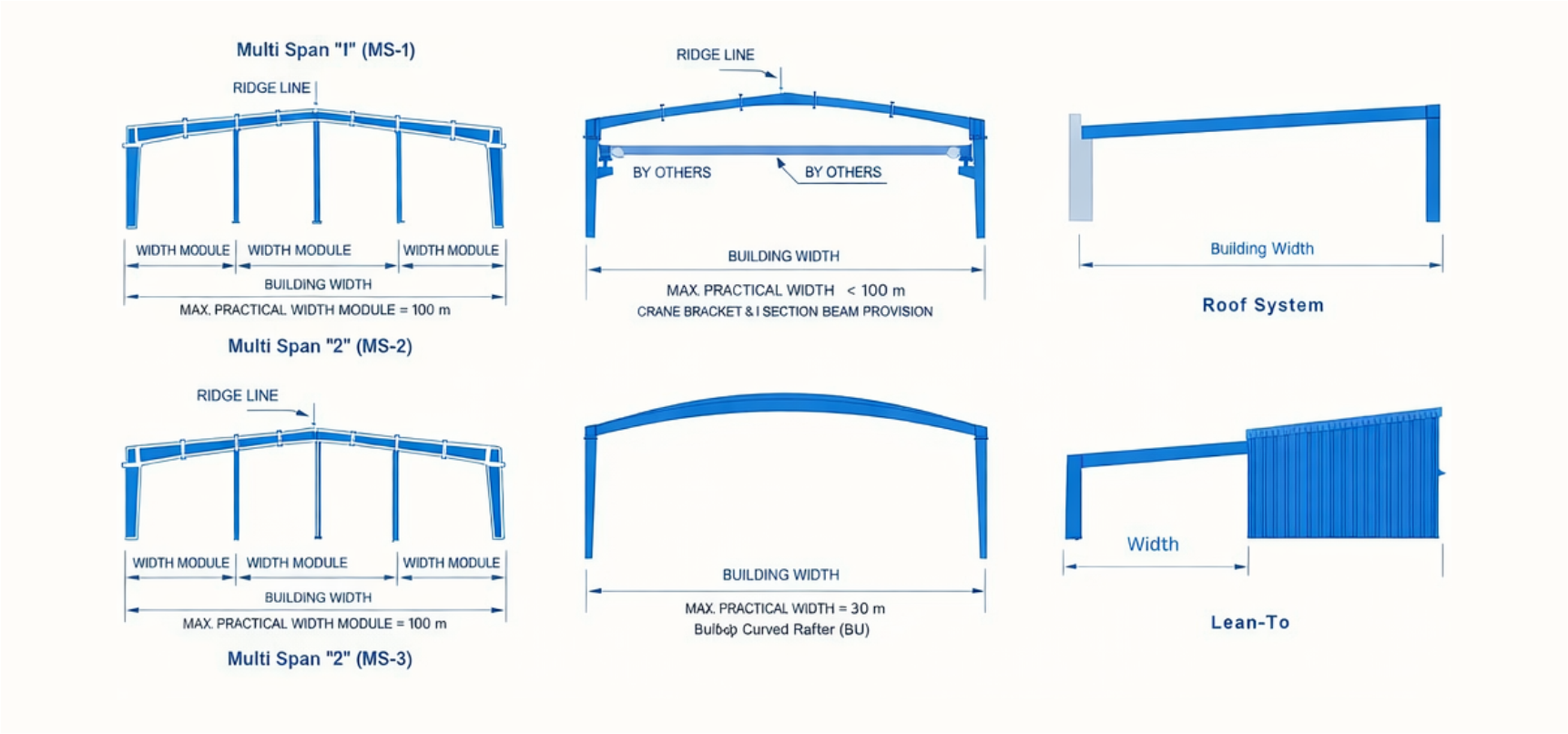
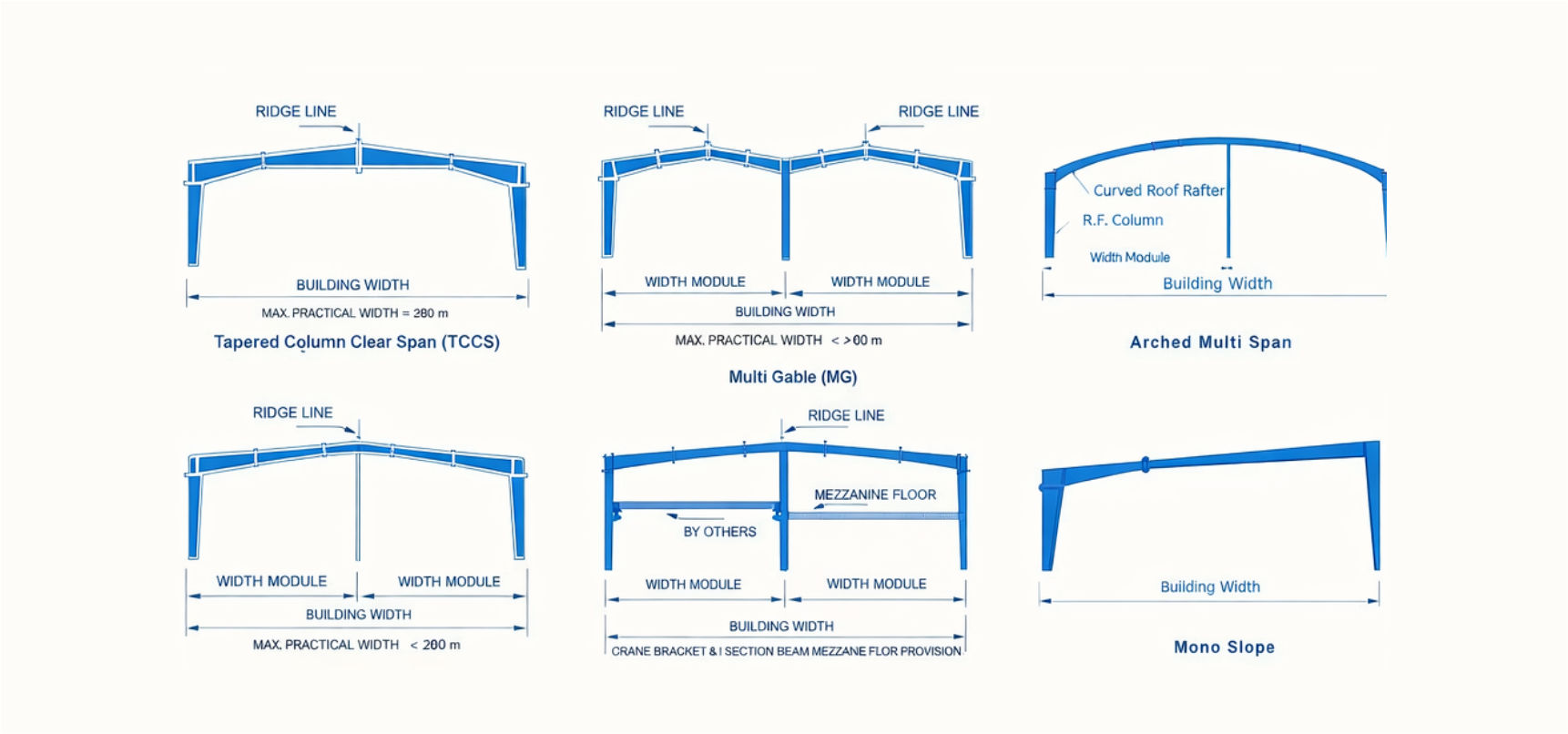
Versatile PEB Structural Configurations
Explore a wide range of pre-engineered building frame types and roof systems designed to
meet
diverse industrial, commercial, and infrastructure requirements with precision and
efficiency.
PEB engineering services Hyderabad:
We build
the Future with Smart Steel Solutions
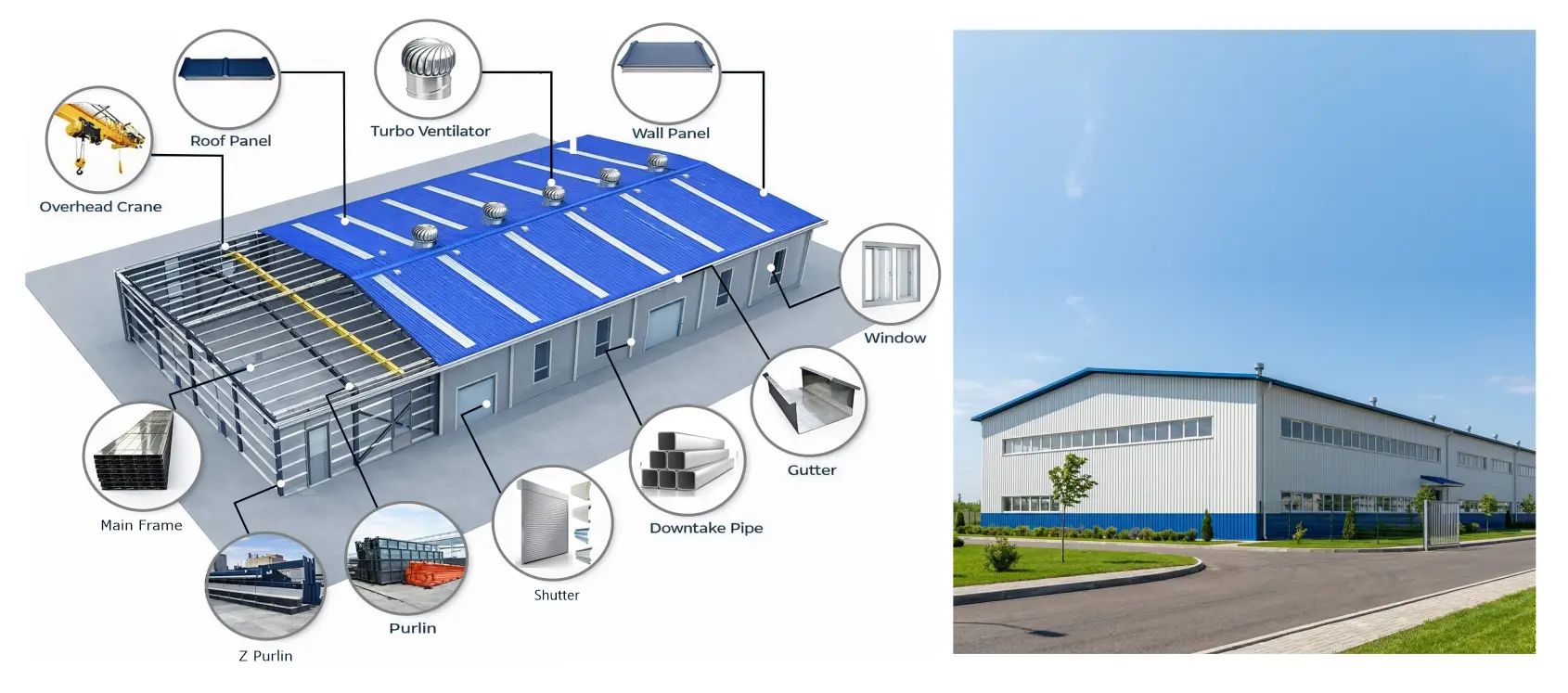
Pre-Engineered Buildings (PEBs) represent the future of modern construction. These advanced steel structures are designed, fabricated, and engineered in a controlled factory environment, then transported to the site for quick and precise assembly. By using optimized steel sections and standardized components, PEBs deliver high structural strength while keeping material usage and costs to a minimum. Unlike conventional RCC construction, pre-engineered buildings offer unmatched speed, flexibility, and efficiency. Every component—columns, rafters, purlins, and panels—is custom-designed to meet project requirements, allowing PEB structures to be tailored for a wide range of applications. From warehouses and industrial sheds to commercial complexes, sports facilities, educational institutions, and airport buildings, PEBs provide a reliable and versatile construction solution.
One of the biggest advantages of PEB construction is its rapid execution. Since all building components are manufactured off-site and arrive ready for installation, construction timelines are significantly reduced. This not only lowers labor costs but also minimizes material wastage, making pre-engineered steel buildings a sustainable and eco-friendly choice. PEB structures are also designed with future growth in mind. Expansions, modifications, or relocations can be carried out easily without disrupting the existing structure. This adaptability makes pre-engineered buildings ideal for businesses and organizations that anticipate growth or evolving space requirements.
“At Future PEB, we believe in combining innovation, precision engineering, and quality steel to deliver structures that stand the test of time. This blog explores the fundamentals of pre-engineered buildings, covering their design principles, construction process, key components, and the long-term benefits that make PEBs the preferred choice for modern infrastructure.”

Advantages of Pre-Engineered Buildings (PEB)

Pre-Engineered Buildings offer exceptional design flexibility, allowing structures to be customized for span length, bay spacing, height, roof slope, and future expansion. PEBs can easily accommodate architectural features, cranes, mezzanines, skylights, and ventilation systems, making them suitable for a wide range of industrial, commercial, and institutional applications.
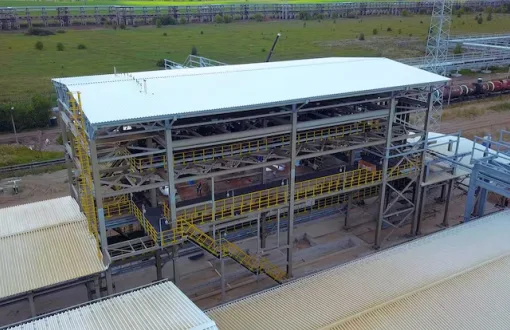
PEB systems are designed and manufactured in accordance with international codes and standards, ensuring structural safety, durability, and compliance with regulatory requirements. Each component undergoes engineering checks and quality verification, making PEB construction a highly regulated and reliable building solution.

All PEB components are fabricated in a controlled factory environment using advanced machinery and strict quality assurance procedures. This ensures consistent material quality, precise dimensions, and superior workmanship compared to conventional on-site construction, resulting in improved overall building performance.

Pre-Engineered Buildings are an eco-friendly construction solution due to optimized steel usage, minimal material wastage, and reduced site disturbance. Steel is fully recyclable, and the efficient construction process lowers energy consumption, carbon emissions, and overall environmental impact.
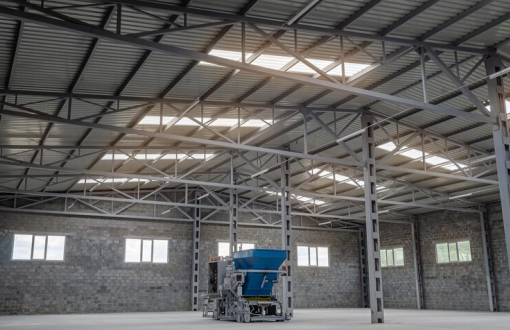
PEB structures require minimal maintenance due to high-quality steel sections, protective coatings, and durable roofing and cladding systems. These buildings are resistant to corrosion, weathering, and structural deterioration, ensuring long service life with reduced operational and maintenance costs.
Structural BIM & Tekla Modelling for Steel Structure Engineering in Hyderabad
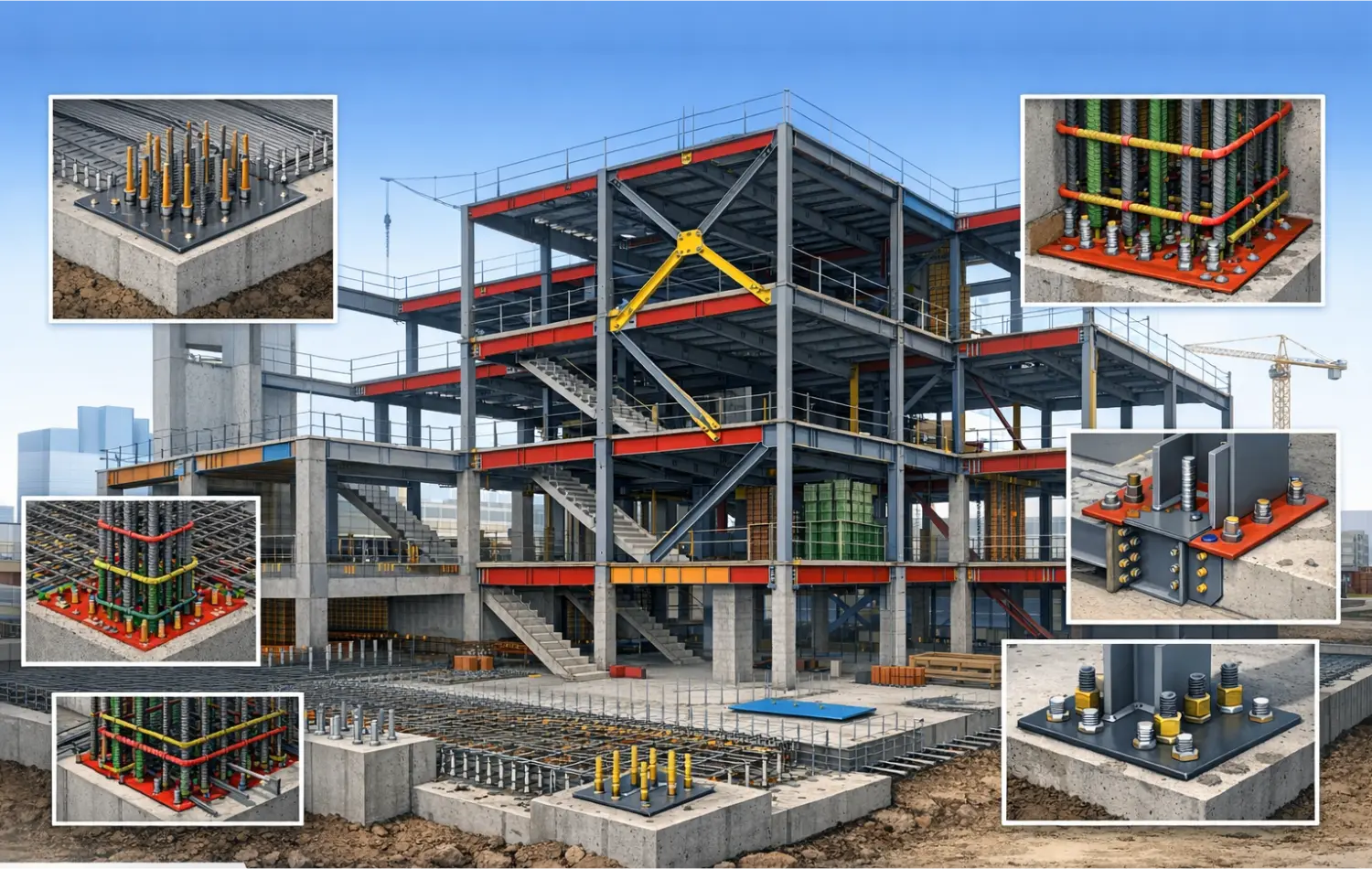
Structural BIM & Tekla Modelling enables the creation of highly accurate, data-rich 3D structural models that reflect real construction conditions. Using Tekla Structures, we model steel and concrete structures with precise geometry, connections, and material intelligence to support design coordination, fabrication, and site execution.
Our models incorporate all critical structural components—including beams, columns, braces, slabs, foundations, rebars, bolts, welds, and embeds—ensuring a true digital representation of the built asset. This level of detail allows early identification of clashes and constructability issues, significantly reducing errors and rework during construction. By integrating BIM workflows, Structural Tekla models serve as a single source of truth for multidisciplinary coordination, automated shop drawings, quantity take-offs, and fabrication data. The result is improved collaboration between engineers, fabricators, and contractors, faster project delivery, and greater cost and schedule control throughout the project lifecycle.
Tekla-based Structural BIM transforms conventional 2D workflows into an integrated 3D process. Every element—steel members, connections, bolts, welds, rebars, embeds, and concrete components—is modeled with construction-level accuracy. These intelligent models serve as a single source of truth for clash detection, quantity take-offs, automated drawings, and fabrication data. By improving coordination between engineers, fabricators, and contractors, Structural BIM significantly reduces errors, rework, and project delays while enhancing overall delivery efficiency.
Advantages of Structural
BIM & Tekla Modelling:
Structural BIM with Tekla ensures constructability, accuracy, and seamless
coordination throughout
the
project lifecycle—from concept design to fabrication and on-site
execution.
- Accurate 3D Structural Modelling with real-world geometry
- Detailed Steel, Concrete & Rebar Modelling at fabrication level
- Advanced Clash Detection & Multi-Discipline Coordination
- Fabrication-Ready Models with precise Shop & Erection Drawings
- Automated Quantity Take-offs, BOQs & Material Reports
- Reduced Errors, Rework & Construction Delays
- Enhanced Constructability Review before site execution
- Faster Project Delivery with optimized workflows
- Improved Communication between Engineers, Fabricators & Site Teams
- Better Cost Control through accurate planning and material optimization
By leveraging Tekla-based Structural BIM, project stakeholders gain complete
visibility and control
over structural systems,
ensuring higher build quality, reduced risk,
and predictable project outcomes.
GA & Shop Drawings
GA & Shop Drawings:
The Backbone of
Precision PEB Construction
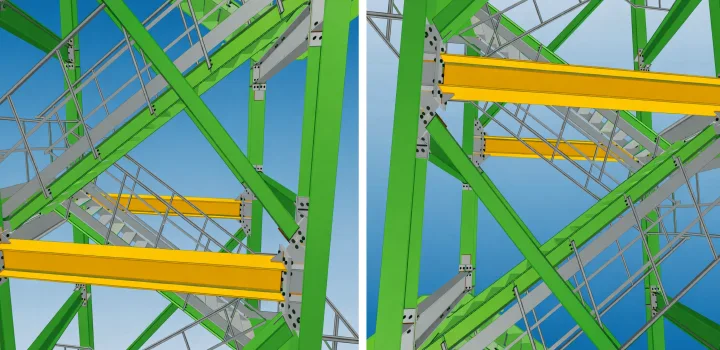
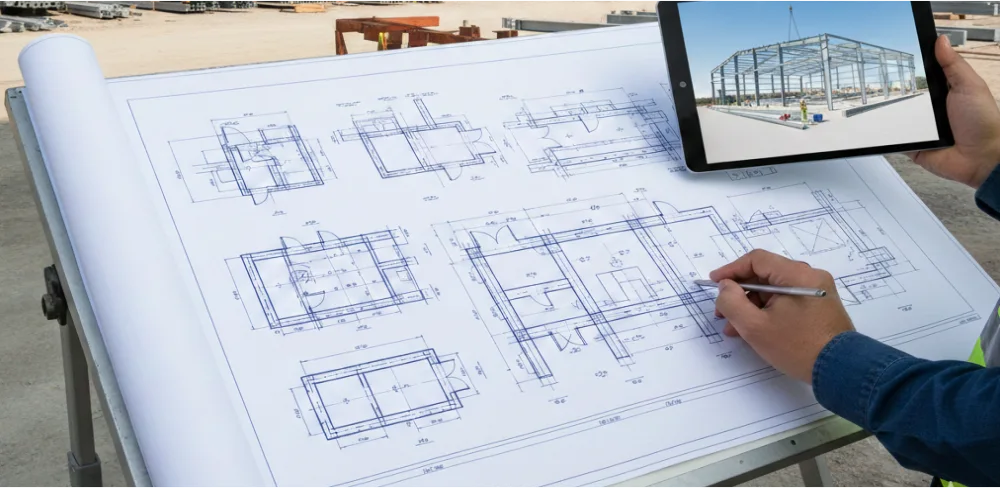
General Arrangement (GA) and Shop Drawings play a critical role in the successful execution of Pre-Engineered Building (PEB) projects. These drawings serve as the foundation for accurate design coordination, fabrication, and on-site construction. Prepared with precision, they translate engineering concepts into clear, buildable instructions that ensure structural integrity, efficiency, and compliance with project specifications. GA drawings provide an overall layout of the structure, including column grids, elevations, framing systems, and component positioning. They offer a comprehensive view that helps stakeholders understand how the building will function as a complete system. Shop drawings, on the other hand, deliver detailed fabrication-level information for each structural member, connection, and component, enabling error-free manufacturing and seamless assembly on site.
In PEB construction, accurate GA and shop drawings significantly reduce rework, delays, and material wastage. Since components are manufactured off-site, any discrepancies in drawings can directly impact timelines and costs. Well-prepared drawings ensure faster approvals, smoother coordination between design and production teams, and efficient installation at site. Additionally, these drawings allow for better planning of future expansions or modifications. With clearly documented dimensions, connections, and loads, PEB structures can be adapted easily to meet evolving project requirements without compromising performance or safety.
“At Future PEB, our GA and shop drawings reflect our commitment to precision, constructability, and quality. By combining advanced engineering tools with industry expertise, we ensure every component fits perfectly—on paper, in production, and on site.”
Importance of GA & Shop Drawings (PEB)
Accurate GA and shop drawings are essential for achieving efficiency, cost control, and structural accuracy in pre-engineered building projects.
- Ensures accurate structural layout and member positioning on site
- Minimizes fabrication errors and material wastage
- Supports smooth coordination between design, fabrication, and erection teams
- Enables precise quantity estimation and cost control
- Reduces on-site rework and construction delays
- Improves overall construction quality and project execution
Value Engineering
Value Engineering for
Smarter Project Management
At Future Peb, value engineering is viewed as a strategic and purposeful process. It focuses on enhancing project outcomes—whether products, services, or processes—while simultaneously optimizing costs. This is achieved through design simplification, smarter resource utilization, identification of cost-effective alternatives, and reduction of unnecessary time and effort across the project lifecycle.
In simple terms, value engineering in project management is about delivering the highest possible value with the most efficient use of resources. By integrating VE principles into project planning and execution, Future Peb helps organizations achieve sustainable results without compromising on quality or performance.
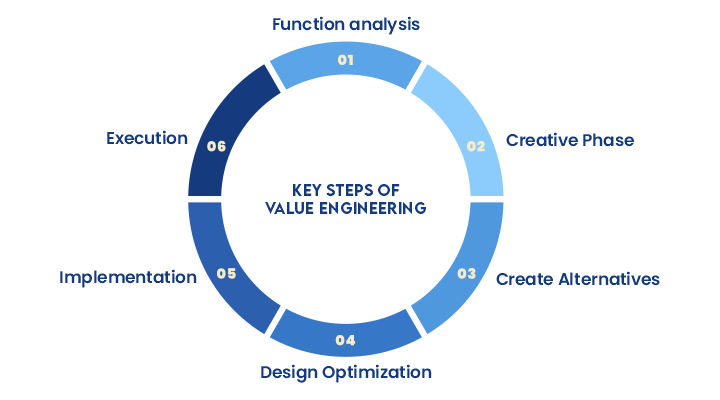
Key Steps of
Value Engineering

Function analysis
Identify essential project functions and evaluate performance requirements to ensure value-driven, cost-effective design decisions overall.

creative phase
Encourage innovative thinking to generate practical ideas improving performance, efficiency, and cost without compromising quality.

Create Alternatives
Develop multiple feasible solutions offering different approaches to achieve required functions efficiently and economically effectively.

Design Optimization
Refine selected alternatives to balance cost, constructability, safety, quality, and performance within project constraints successfully.

implementation
Apply approved value engineering solutions during design or construction while maintaining schedule, quality, and coordination.

Execution
Monitor applied solutions to confirm performance improvements, cost savings, and long-term project value achievement outcomes.
 Whatsapp
 Phone Call